
Policy Address | Foreign Chambers Support Five-Year Plan; John Lee Reiterates It Is Not a Planned Economy, but Combines Government Policy with Market Forces
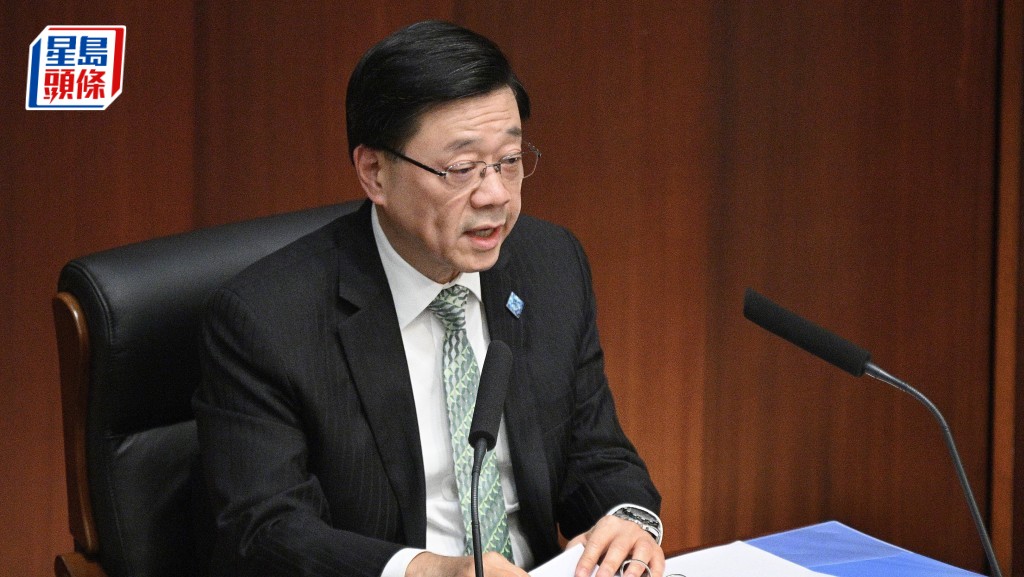
Chief Executive John Lee this morning (21 September) led several government officials in meeting foreign consuls-general in Hong Kong and representatives of foreign chambers of commerce. They introduced the ideas, priorities and key highlights of Hong Kong’s first Five-Year Plan and the Policy Address.
John Lee reiterated that Hong Kong’s first Five-Year Plan should not be equated with a planned economy. Representatives from the Australian Chamber of Commerce in Hong Kong, the European Chamber of Commerce in Hong Kong and the British Chamber of Commerce in Hong Kong all expressed support for the plan, saying it helps provide a clearer picture of Hong Kong’s future development direction.
Three foreign chambers support Hong Kong’s Five-Year Plan
John Lee stressed that Hong Kong’s first Five-Year Plan is not a planned economy. Rather, it is a planning process that combines government policy with market forces, allowing everyone to identify the best approach to achieve objectives effectively. It also retains flexibility to make adjustments when circumstances fall outside of the government’s control.
Mary Simpson, Chief Executive of the Australian Chamber of Commerce in Hong Kong, said the real opportunity is not simply for companies to sell products into Hong Kong, but to use the city as a launchpad and leverage its role as a “super-connector” and “super value-adder”.
The Five-Year Plan draws on Hong Kong’s established pillar industries—finance, legal services and logistics—and directs them toward emerging growth sectors including artificial intelligence, green technology, critical minerals and medical technology. She said the synergies are particularly clear for Australian businesses.
Johannes Hack, Chairman of the European Chamber of Commerce in Hong Kong, said that while establishing the Five-Year Plan is positive, Hong Kong already has significant advantages—otherwise, so many companies would not have established a presence in the city. He believes further development can be built on this strong foundation of trust, underpinned by Hong Kong’s robust regulatory framework and common-law system.
Paul McComb, Executive Director of the British Chamber of Commerce in Hong Kong, said the most important aspect of the Five-Year Plan is that it provides a degree of certainty about the direction of future development. This indicates that policies businesses have been hearing about will continue, rather than being temporary recommendations tailored only to current conditions; it represents a clear development path.